Pearson Edexcel · GCSE · History
Course version: 1HI0 · Version from Sept 2016
C1500–c1700: Crime and punishment in early modern England - 2 The nature…
Full specification wording
Option 10: c1500–c1700: Crime and punishment in early modern England - 2 The nature of law enforcement and punishment: The continued use of corporal and capital punishment; the introduction of transportation and the start of the Bloody Code.
Punishment in the early modern period was characterised by harsh public spectacles designed for deterrence.
Checked against the Pearson Edexcel 1HI0 specification (opens in a new tab) on .
- Point 2 of 2
- 4 key terms
Study notes
From the checked teaching notes for this specification point.
The idea
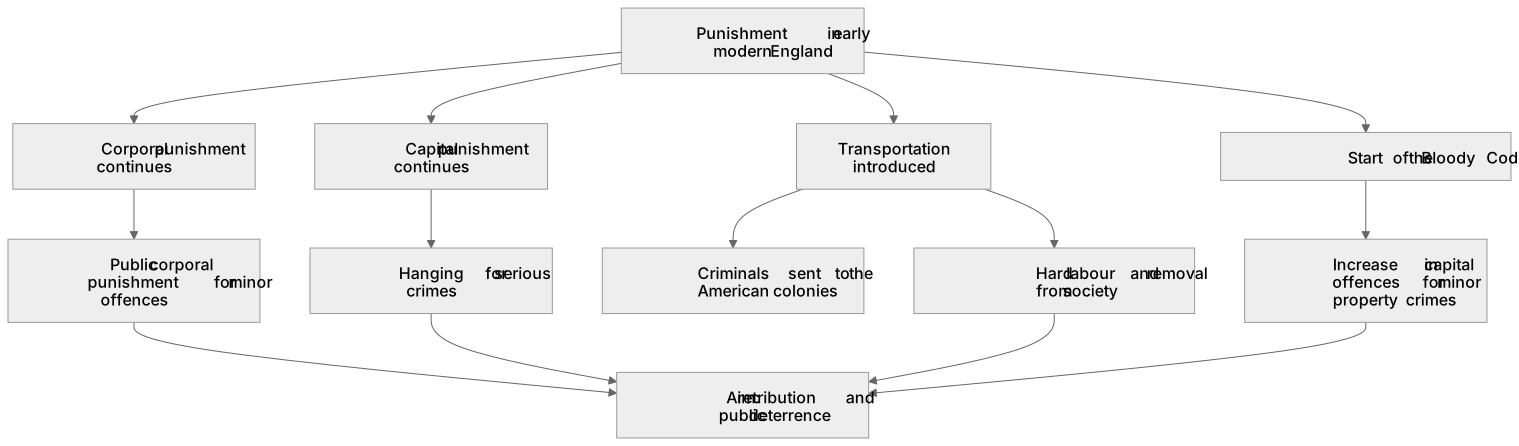
Punishment in the early modern period was characterised by harsh public spectacles designed for deterrence. Corporal punishment (like the pillory or whipping) and capital punishment (hanging) continued as primary methods for dealing with offenders. However, this era introduced transportation, beginning under James I, where criminals were sent to the American colonies to perform hard labour, offering an alternative to execution while removing the offender from society. The late seventeenth century also saw the start of the 'Bloody Code', a legal system that drastically increased the number of crimes punishable by death, including minor property offences.
What earns the marks
- Identify the continued reliance on public corporal punishment, such as the stocks and pillory, for minor offences and capital punishment for serious crimes.
- Explain the introduction of transportation to North America as a new punishment that provided a deterrent, removed criminals, and supplied colonial labour.
- Describe the origins of the Bloody Code in the late seventeenth century, noting the increase in capital offences for minor property crimes.
- Analyse the underlying purpose of these punishments, focusing on retribution and public deterrence in the absence of a professional police force.
Common mistakes and how to put them right
Confusing the destination of early transportation.
Put it right: Criminals in this period were sent to North America, not Australia, which only began in the late eighteenth century.
Assuming the Bloody Code was fully formed by 1700.
Put it right: It started in the late seventeenth century but the number of capital crimes peaked later in the eighteenth century.
Believing that transportation was a soft punishment.
Put it right: It actually involved a dangerous voyage and years of gruelling forced labour, often resulting in death.
Exam tips
- Clearly distinguish between corporal punishment, which involves inflicting physical pain, and capital punishment, which is execution.
- When discussing transportation, mention its dual purpose: punishing the criminal and providing a workforce for the new American colonies.
- Link the start of the Bloody Code to the authorities' fear of rising crime rates and the protection of wealthy landowners' property.
Try the lesson
The start of the Option 10: c1500–c1700: Crime and punishment in early modern England - 2 The nature of law enforcement and punishment: The continued use of corporal and capital punishment; the introduction of transportation and the start of the Bloody Code. lesson, made from checked teaching notes for this specification point.
Have a go first
In the seventeenth century, what did the punishment of 'transportation' involve?
Listen
Punishment in the early modern period was characterised by harsh public spectacles designed for deterrence. Corporal punishment (like the pillory or whipping) and capital punishment (hanging) continued as primary methods for dealing with offenders. However, this era introduced transportation, beginning under James I, where criminals were sent to the American colonies to perform hard labour, offering an alternative to execution while removing the offender from society. The late seventeenth century also saw the start of the 'Bloody Code', a legal system that drastically increased the number of crimes punishable by death, including minor property offences. A strong answer earns marks for these points. Identify the continued reliance on public corporal punishment, such as the stocks and pillory, for minor offences and capital punishment for serious crimes. Explain the introduction of transportation to North America as a new punishment that provided a deterrent, removed criminals, and supplied colonial labour. Describe the origins of the Bloody Code in the late seventeenth century, noting the increase in capital offences for minor property crimes. Analyse the underlying purpose of these punishments, focusing on retribution and public deterrence in the absence of a professional police force. Exam tip: Clearly distinguish between corporal punishment, which involves inflicting physical pain, and capital punishment, which is execution.
See it
Key words
Say what each word means before you turn the card.
Corporal punishment
Try answering aloud or in your head before turning the card.
Capital punishment
Try answering aloud or in your head before turning the card.
Transportation
Try answering aloud or in your head before turning the card.
Bloody Code
Try answering aloud or in your head before turning the card.
See every definition
- Corporal punishment
- A punishment that involves inflicting physical pain, such as the pillory or whipping, and continued as a primary method for dealing with offenders.
- Capital punishment
- Execution, such as hanging, which continued as a primary method for dealing with offenders.
- Transportation
- A punishment introduced under James I in which criminals were sent to the American colonies to perform hard labour, offering an alternative to execution while removing the offender from society.
- Bloody Code
- A legal system begun in the late seventeenth century that drastically increased the number of crimes punishable by death, including minor property offences.
Label the diagram
Some boxes have lost their names. Pick the right name for each number.
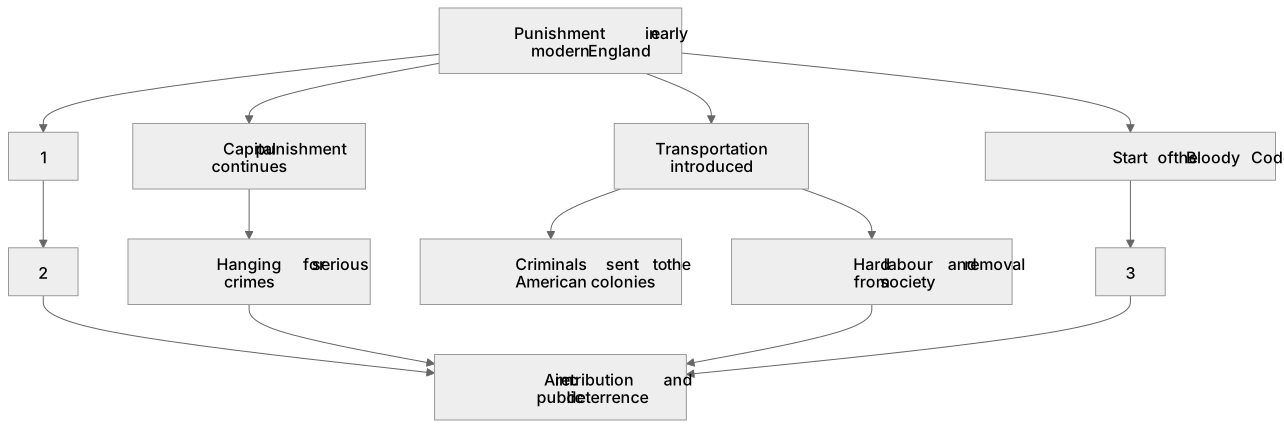
1Box 1
2Box 2
3Box 3
There is more to this lesson
The full lesson goes on to check your understanding and help you earn the marks. Create a free account to carry on, with your progress saved.
A week of Premium from your first lesson · Then the free plan continues · No card, no charge
Test your understanding of Option 10: c1500–c1700: Crime and punishment in early modern England - 2 The nature of law enforcement and punishment: The continued use of corporal and capital punishment; the introduction of transportation and the start of the Bloody Code.
Active recall beats re-reading. Take an instant quiz now to test what you’ve learned and lock it into long-term memory.
A week of Premium from your first lesson · Then the free plan continues · No card, no charge